
We've tested the latest tech to bring you the best camera phones for every budget.
- Best iPhone camera: iPhone 17 Pro Max
- Best Google camera: Google Pixel 10 Pro XL
- Best Samsung camera: Samsung Galaxy S25
- Best for zoom: Oppo Find X9 Pro
- Best for AI features: Google Pixel 10 Pro
- Best for close-ups: iPhone 17 Pro
- Best for night-time shots: Samsung Galaxy S25 Ultra
- Best for selfies: Google Pixel 10 Pro
- Best foldable: Samsung Galaxy Z Fold7
- Best mid-range camera: Google Pixel 9a
Your best camera yet is already in your pocket – or, at least, it could be.
Don’t settle for blurry videos and unfocused snaps; with our expertly picked list of the best camera phones on the market, we’ll help you level up your phone photography and find a whole range of flagship-worthy phone features to boot.
We’ve tested the latest camera phones to compile our list of the best camera phones available right now. From the professional-quality lenses of the iPhone 17 Pro Max to the innovative tech behind the Google Pixel 10 Pro XL, this guide will help make your choice an easy one with options for every need and budget.
Seen a camera phone that’s caught your eye? Get snapping straight away with our award-winning pay monthly deals from iD Mobile. brought to you by Currys.
Best iPhone camera: iPhone 17 Pro Max
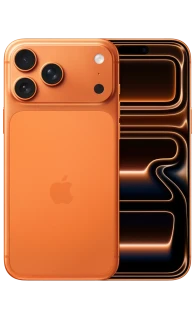
The iPhone 17 Pro Max takes our top spot for the best iPhone camera, setting a new industry benchmark for candid smartphone snappers.
We found images and videos showed up beautifully on the vast 6.9-inch Super Retina XDR display. With up to 3,000 nits of outdoor peak brightness, you can review your shots even in bright sunlight.
This phone's major step up is powered by its next-gen A19 Pro chip, which - according to Apple - delivers the best performance of any mobile CPU on the market right now. The speed and power behind this processor means you’ll have zero shutter lag to contend with: we found that taking landscape shots on a freezing morning came out just as well as nighttime group selfies. It’s also the key driver behind some of our favourite features like Spatial Mode, which allows you to take incredible 3D immersive pictures and videos.
The innovative triple 48MP Fusion system is a first for Apple, and a serious win at that. All three lenses boast a full 48MP resolution, and the new tetraprism telephoto lens offers an incredible 8x optical-quality zoom. In our opinion, this upgraded versatility solidifies the iPhone 17 Pro Max as the most professional and capable camera system Apple has ever created.
- Release date: 19th September 2025
- Dimensions: 163.4 x 78 x 8.75mm
- Weight: 231g
- Display size and resolution: 6.9-inch OLED display and 2868x1320 pixels
- OS: iOS 26
- Refresh rate: 120Hz
- Storage: 256 GB, 512 GB, 1TB or 2TB
- CPU: A19 Pro chip
- RAM: 12GB
- Battery: up to 37 hours of video playback
- Rear cameras: 48MP Pro Fusion camera system, 48MP Fusion ultra-wide lens, 48MP Fusion telephoto lens
- Front camera: 18MP lens
- Ceramic Shield 2 screen includes an anti-reflective coating and scratch resistance for greater longevity
- Powerful up to 37 hours of video playback battery lets you scroll and stream for as long as you need
- Industry-leading A19 Pro chip makes for next-level performance when you’re recording or reviewing video
Since this model is Apple’s flagship device, it comes at a more premium price point. You’ll get plenty of bang for your buck – but if you’re looking for a more budget-friendly mid-range option, we’d recommend the Google Pixel 9a.
Best Google camera: Google Pixel 10 Pro XL

Integrating cutting-edge computational photography, the Google Pixel 10 Pro XL includes the most intelligent camera system Google has ever delivered.
At the heart of this performance is the new custom-made Tensor G5 chip, which enhances and drives game-changing AI-powered video and photography features. The new 100x ProRes Zoom uses Zoom Enhance generative AI to realistically capture intricate details, intelligently cleaning up shots that would typically be a blurry mess.
Likewise, the enhanced 50MP main sensor and Tensor G5 chip work together to power Super Actua Video, delivering real-time video boosting and some of our favourite AI features. You're not just taking a picture; you're using Google's most advanced AI to ensure every photo and video is professional-grade quality.
Add Me remains one of our favourite functions, letting you combine multiple photos into one - so the photographer can still be included in any group pictures. It's a nice AI integration that’s become a genuinely useful way of capturing meaningful shots.
- Release date: 28th August 2025
- Dimensions: 162.8 x 76.6 x 8.5 mm
- Weight: 232g
- Display size and resolution: 6.8-inch Super Actua OLED display and 1344 x 2992 pixels
- OS: Android 16
- Refresh rate: 120Hz
- Storage: 256GB, 512GB or 1TB
- CPU: Google Tensor G5
- RAM: 16GB
- Battery: 5,200mAh
- Rear cameras: 50MP wide lens, 48MP ultra-wide lens and 48MP 5x telephoto lens
- Front camera: 42MP
- IP68 water and dust resistance means you can shoot in all weather conditions, risk-free
- Powerful 5,200mAh battery with rapid charging speeds and 25W wireless charging
- Flagship Google Pixel AI integrations with advanced features like Gemini assistant
With a battery of this size, this handset is a little on the weightier side. If you’re looking for a more compact, lightweight model, we’d recommend the Galaxy S25, which is a more manageable 162g instead.
Best Samsung camera: Samsung Galaxy S25

The Samsung Galaxy S25 offers an excellent camera experience, expertly blending flagship-level photography with a perfectly compact, user-friendly design. It delivers exceptional performance without any added bulk, making it the ideal choice for candid snappers.
Powering its advanced capabilities is the Snapdragon 8 Elite for Galaxy chip, which really unlocks the full potential of Samsung’s AI features. These AI capabilities go above and beyond in the editing suite, delivering intelligent image tuning and tone adjustments. Our favourite, the Object Aware Engine, cleverly enhances your pictures to ensure accurate colours, rich textures, and incredibly sharp detail, no matter the subject or conditions. We tested this on one of the trickier subjects to photograph – a cat – and it worked brilliantly. It was able to sharpen any motion blurring and bring out colours and fur textures that are lost in lesser camera designs.
The versatile triple-lens rear camera system is also built for almost any scenario with a 50MP lens for stunningly sharp, professional-grade shots, a 12MP ultra-wide lens for sweeping views, and a 10MP telephoto lens with 3x zoom. If you're looking for a Samsung camera that balances power, advanced AI, and pocketable convenience, the Galaxy S25 is a clear winner.
- Release date: 7th February 2025
- Dimensions: 146.9 x 70.5 x 7.2mm
- Weight: 162g
- Display size and resolution: 6.2-inch Dynamic AMOLED 2X and 2340 x 1080 pixels
- OS: Android 15
- Refresh rate: 120Hz
- Storage: 128GB, 256GB or 512GB
- CPU: Snapdragon 8 Elite
- RAM: 12GB
- Battery: 4,000mAh
- Rear cameras: 50MP lens, 10MP lens and 12MP lens
- Front camera: 12MP
- Snapdragon 8 Elite processor makes for seamless, rapid performance
- Reinforced with a durable Armor Aluminium frame, this handset feels solid and sturdy in the hand
- Light and pocket-friendly, this is a great choice for on-the-go shots
Due to its lightweight frame and size, this phone’s battery size is also more compact. If you’re looking for a more heavy-duty, longer-lasting battery, we would recommend the Oppo Find X9 Pro instead.
Best for zoom: Oppo Find X9 Pro

The Oppo Find X9 Pro delivers a complete package: a top-tier daily smartphone that doubles as a professional-grade zoom camera.
First things first for photography fans: this handset boasts a massive 200MP periscope telephoto lens. Co-engineered with Hasselblad, this ultra-high-resolution camera is specifically designed to capture details from a distance with beautiful clarity. It’s a non-pixelated pleasure to use.
The camera system provides incredible 3x optical zoom and extends to an impressive 13.2x zoom without losing any detail, by intelligently cropping the huge 200MP image. Want to get even closer? The Hasselblad teleconverter accessory boosts the optical zoom further, turning your mobile phone into an actual professional camera.
Beyond this camera mastery, the Find X9 Pro is a true flagship powerhouse. The rapid MediaTek Dimensity 9500 chip ensures a smooth experience whether you're snapping shots in quick succession or editing 4K video. Ideally for longer shooting days, it also packs a gigantic 7,500mAh battery - one of the largest on the market - which when we put to the test, lasted nearly three days without needing to be recharged.
- Release date: 22nd October 2025
- Dimensions: 161.26 x 76.46 x 8.25 mm
- Weight: 224g
- Display size and resolution: 6.78-inch AMOLED FHD+ display and 1272 x 2772 pixels
- OS: ColorOS 16
- Refresh rate: 120Hz
- Storage: 256GB or 512GB
- CPU: MediaTek Dimensity 9500
- RAM: 16GB
- Battery: 7,500mAh
- Rear cameras: 50MP wide lens, 200MP telephoto, 50MP ultrawide and 2MP monochrome
- Front camera: 50MP
- IP69 water and dust resistance offers some of the highest protection on the market
- High-resolution 200MP telephoto lens lets you zoom in with perfect clarity
- Enormous 7,500mAh battery delivers long-lasting power for extended use.
Thanks to the size of the battery, this handset takes a little longer to power up. If speedy charging is more of a priority for you, you’d be better off with a phone like the Google Pixel 10 Pro.
Best for AI features: Google Pixel 10 Pro

The Google Pixel 10 Pro isn’t just a flagship smartphone; it's a revolutionary leap in mobile AI technology, making it our top choice for users who want seamlessly smart AI features.
Google’s excellent AI capabilities kick in as soon as you tap the camera button. Using Gemini Nano, the Camera Coach analyses your scene in real time, helping you improve your shot before you’ve even taken it. There’s framing suggestions that help you capture your subject in their best light, while Automatic modes like Portrait or Night Sight make sure you avoid any blur.
Thanks to the custom-made Tensor G5's processing, filming and video editing are now lightning-fast. Google has significantly upgraded its Video Boost technology, using AI to perform dramatic upscaling and reducing graininess on low-light footage. The result is near-professional, high-resolution video no matter where you’re filming.
- Release date: 28th August 2025
- Dimensions: 152.8 x 72 x 8.6mm
- Weight: 207g
- Display size and resolution: 6.3-inch Super Actua and 1280 x 2856 pixels
- OS: Android
- Refresh rate: 1-120Hz
- Storage: 128GB, 256GB, 512GB or 1TB
- CPU: Google Tensor G5
- RAM: 16GB
- Battery: 4,870mAh
- Rear cameras: 50MP wide lens, 48MP ultra-wide lens and 48MP 5x telephoto lens
- Front camera: 42MP
- Astrophotography makes snapping night-time shots a breeze
- Impressive 16GB of RAM to support effortless multitasking
- Powers wirelessly up to 15W for upgraded, speedy charging
Whilst it will still easily last you all day, the battery capacity is slightly lower than some other models on this list. If you’re looking for a battery that goes that extra mile and beyond at 7,500mAh, we’d recommend the Oppo Find X9 Pro.
Best for close-ups: iPhone 17 Pro

When it comes to close-ups, the iPhone 17 Pro sets a new standard for capturing detail, making it a top choice for macro photography enthusiasts.
With its newly upgraded 48MP ultra-wide lens, the iPhone 17 Pro can lock focus as close as 2cm away, opening up a whole new level of detail for mobile phone photography. The new 48MP 4x telephoto lens also excels as a secondary telemacro lens, allowing you to capture stunning close-up images from a comfortable distance too. It’s a nice touch that means your own shadow won’t get in the way as you set up your shot.
As long-time Apple fans, we can attest that the 17 Pro’s entire camera experience is seamless. Automatic modes let you focus and zoom with ease: Apple's smart lens-switching software detects when you move close to a subject and instantly transitions into Macro mode. This means there’s no jarring colour shifts or focus lag, so you can take intricate shots no matter what your subject matter is.
- Release date: 19th September 2025
- Dimensions: 150 x 71.9 x 8.75mm
- Weight: 204g
- Display size and resolution: 6.3-inch Super Retina XDR display and 2622x1206 pixels
- OS: iOS 26
- Refresh rate: 120Hz
- Storage: 256 GB, 512 GB or 1TB
- CPU: A19 Pro chip
- RAM: 12GB
- Battery: up to 31 hours of video playback
- Rear cameras: 48MP Pro Fusion camera system, 48MP Fusion ultra-wide lens, 48MP Fusion telephoto lens
- Front camera: 18MP Centre stage camera
- Bright ProMotion display with built-in anti-reflection for improved visibility even in bright sunshine
- 18MP Centre stage camera automatically fits your whole group into a selfie shot
- Ceramic Shield 2 screen offers durable protection and scratch resistance
Similarly to the iPhone 17 Pro Max, this model is a flagship handset and so is pricier than other phones on the market. We’d recommend the Samsung Galaxy S25 if you want innovative tech at a more affordable price.
Best for night-time shots: Samsung Galaxy S25 Ultra

The Samsung Galaxy S25 Ultra takes our first place for night-time shots and sets the bar for low-light smartphone photography in general. With this phone you’ll get clarity in near pitch-black conditions, thanks to upgraded camera hardware and intelligent AI integrations.
Led by an excellent 200MP camera sensor, the S25 Ultra uses pixel-binning technology to merge 16 pixels into one massive 'super-pixel', which can absorb even more light. We’ve tested it at dusk and dawn, and the result is a low-light photo that is bright, sharp and super-detailed.
Part of the excellent ProVisual Engine, one of our favourite features is the Spatio-Temporal Filter. This minimises grain and motion blur by differentiating between moving subjects and still backgrounds, so you can capture clear, dramatic action shots, even in the dark.
The S25 Ultra’s wider design is also nicely engineered to combat other common night shooting frustrations. Glare is reduced thanks to enhanced Gorilla Glass Armour with a handy anti-reflective coating, so you can say goodbye to distracting lens flares. Read more in our S25 Ultra review.
- Release date: 7th February 2025
- Dimensions: 162.8 x 77.6 x 8.2mm
- Weight: 218g
- Display size and resolution: 6.9-inch Dynamic AMOLED 2X and 3120 x 1440 pixels
- OS: Android
- Refresh rate: 120Hz
- Storage: 256GB, 512GB or 1TB
- CPU: Snapdragon 8 Elite
- RAM: 12GB
- Battery: 5,000mAh
- Rear cameras: 200MP lens, 50MP lens, 50MP lens and 10MP lens
- Front camera: 12MP
- Intelligent AI features use contextual signals to help make daily admin that little bit more simple
- Premium, durable titanium frame with improved heat regulation
- Built-in S pen makes editing photos and videos a dream
This powerhouse of a phone is certainly not on the small side. If you’re looking for a more compact phone that’ll easily fit into your pocket, we’d recommend trying the S25 model instead, which comes in at a smaller 6.2 inches.
Best for selfies: Google Pixel 10 Pro
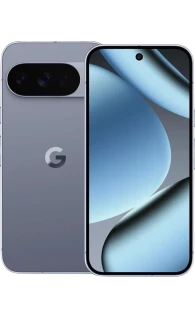
The Google Pixel 10 Pro earns its title as the best selfie camera phone on the market by blending powerful hardware with innovative Gemini AI capabilities.
The biggest highlight for us is the device’s 42MP ultra-wide front camera - a huge jump in resolution compared to the Pixel 10’s 10.5MP selfie lens. Say goodbye to awkward framing and pulling a muscle trying to fit everyone in. The 103° field of view on the ultrawide front lens is smart enough to automatically detect large groups or wide backgrounds. It then intelligently expands the frame to perfectly accommodate all your friends or capture a landscape behind you without cropping anyone out.
We also love Google’s new AI-powered Camera Coach, which offers real-time tips to help you improve framing and composition before you take a photo. It analyses the scene using Google’s Gemini models and provides helpful guidance so you can capture a more polished, professional-looking selfie.
- Release date: 28th August 2025
- Dimensions: 152.8 x 72 x 8.6mm
- Weight: 207g
- Display size and resolution: 6.3-inch Super Actua and 1280 x 2856 pixels
- OS: Android 16
- Refresh rate: 120Hz
- Storage: 128GB, 256GB, 512GB or 1TB
- CPU: Google Tensor G5
- RAM: 16GB
- Battery: 4,870mAh
- Rear cameras: 50MP wide lens, 48MP ultra-wide lens and 48MP 5x telephoto lens
- Front camera: 42MP
- Super-bright display makes sure snapping in sunlight is easy on your eyes
- Ultra-powerful Google Tensor G5 custom chip for rapid performance
- Intelligent Google Pixel AI integrations with features like Gemini Assistant taking centre-stage
Though not as heavy as some other options on the list, at 207g this model might be on the heavier side if you need a sleeker phone. We’d recommend the Samsung Galaxy S25 instead, which is a handier 162g.
Best foldable phone: Samsung Galaxy Z Fold7

Thanks to the phenomenal 200MP main camera, the Galaxy Z Fold7 makes for professional-grade photography with incredible detail and clarity.
On top of this, it’s been specifically engineered for portability, folding up to be just as sleek as a regular smartphone, but giving you a pocket-sized camera, phone, and tablet all in one. With powerful generative AI and the seamless foldable design, this model is perfect for editing photos and videos side by side in great detail as soon as you’ve taken them. We’ve found that, due to the folding screen, the Z Fold7 is also perfect for group selfies, as the expanded camera angle of the open 8-inch screen means you can include even more people in one picture.
- Release date: 25th July 2025
- Dimensions: Folded – 158.4 x 72.8 x 8.9mm, Unfolded – 158.4 x 143.2 x 4.2mm
- Weight: 215g
- Display size and resolution: 8-inch AMOLED 2X and 2184 x 1968 pixels
- OS: Android
- Refresh rate: 120Hz
- Storage: 256GB, 512GB or 1TB
- CPU: Snapdragon 8 Elite
- RAM: 12GB (256GB, 512GB) or 16GB (1TB)
- Battery: 4,400mAh
- Rear cameras: 200MP lens, 12MP lens, 10MP lens
- Front camera: 10MP
- Cover camera: 10MP
- Ultra-tough with innovative Armor FlexHinge for maximum fold protection
- Enhanced immersive 8-inch Dynamic AMOLED 2X main display
- Pocket-friendly at just 8.9mm thick when folded
Whilst this phone is engineered for repeated folding, all foldable phones are more prone to damage than regular smartphones due to the nature of their design. If that’s something that could put you off, we’d recommend the reinforced Samsung Galaxy S25.
Best mid-range camera: Google Pixel 9a

Our choice for the best mid-range camera phone has to be the Google Pixel 9a. It delivers all the best of Google’s innovative photography software at a much more accessible price.
Don’t let the lower price point fool you, though. The Pixel 9a’s photography capabilities rival those of premium flagship phones. Its rear camera, paired with Google's powerful image processing, ensures solid, vibrant, and detailed photos for all your everyday shooting needs.
We’ve tested features like the incredible Night Sight mode and AI-driven editing tools like Magic Eraser, and you really do get the shot you want, every time.
With a powerful Google Tensor G4 chip, the Pixel 9a delivers smooth, smart performance without the hefty price tag. This makes it the perfect choice for users who prioritise a top-quality camera and intuitive smartphone features, but don’t want to pay flagship prices.
- Release date: 10th April 2025
- Dimensions: 154.7 x 73.3 x 8.9mm
- Weight: 186g
- Display size and resolution: 6.3-inch Actua OLED and 1080 x 2424 pixels
- OS: Android 15
- Refresh rate: 60-120Hz
- Storage: 128GB or 256GB
- CPU: Google Tensor G4
- RAM: 8GB
- Battery: 5,100mAh
- Rear cameras: 48MP wide lens, 13MP ultra-wide lens
- Front camera: 13MP
- Edit your images on a brighter, bigger Actua display
- Powerful custom-made Google Tensor G4 for ultra-smooth performance
- Impressive 5,100mAh battery offering over 30 hours of use
Summary
Whether you’re a content creator, a keen traveller, or just want sharp, vibrant pictures each time, we’ve got the perfect model for every need and budget.
If you’re looking for more reviews to help guide your phone search, we’ve covered the best AI phones.
FAQs
Most modern phone cameras include a range of lenses to help you capture both close-up images and much wider shots. They often work individually as well as in combination to help you get the best images. If you have a smartphone, you’ll usually find the following:
- Main wide-angle lens: Default lens that usually has the best quality and takes a picture with a wider field of view
- Telephoto lens: Zoom in without the image becoming blurry
- Macro lens: Close-up shots with high-quality detail
The number of megapixels (MPs) you need mostly depends on how you’re planning to use your phone camera. If you’re just snapping everyday photos, you’ll likely need fewer megapixels than someone using their phone as their main camera for professional work or shooting in tricky, low-light conditions.
As a general rule, 12MP is the perfect amount for most people, giving you plenty of high-quality detail in your pictures.
Yes! Your camera isn’t powered by the Internet, so you can use it normally even if you’re in an area with no reception. Some editing features may need a 5G or Wi-Fi connection to work in full, but you can snap away as usual wherever you are. Just bear in mind that backing up, editing or sharing 4K video and high-res photos can use up data fast, an unlimited data SIM only plan means you won't have to think twice about uploading everything you shoot.